


 Europe
Why France is protesting, from schools to a budget revolt
What began as school protests over teacher shortages has become France's worst unrest in years, fuelled by a €54 billion austerity budget. What is happening.

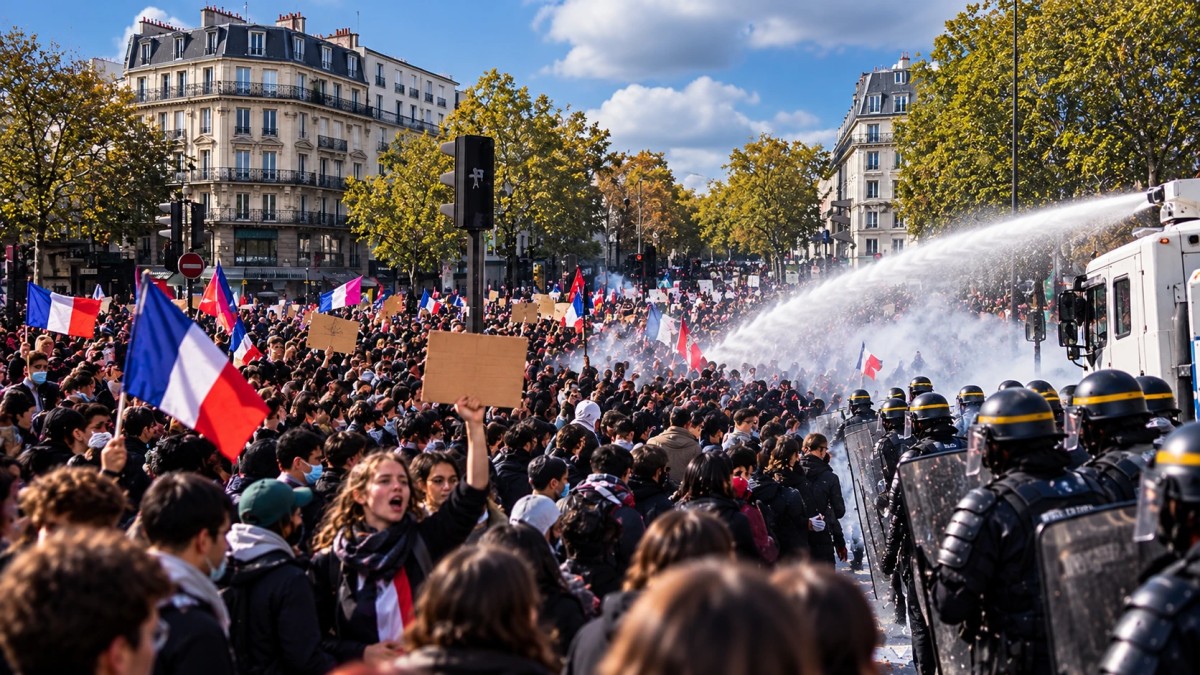
France is facing its worst unrest in years. A protest movement that began in high schools near Paris over teacher shortages has grown into a nationwide revolt against the government's plan to save €54 billion in its 2027 budget, drawing in unions, the Yellow Vests and hundreds of thousands of people.
About 550,000 people marched across the country on Saturday, 17 October, including 110,000 in Paris, according to the Interior Ministry, Al Jazeera and CNBC reported. Most marches were peaceful, but some turned into riots, with shops looted and buildings attacked.
Key points
- What started it: a student movement in the working-class suburbs north of Paris over teacher shortages and run-down schools.
- Scale: about 550,000 people marched nationwide on 17 October, 110,000 of them in Paris, the Interior Ministry said.
- Arrests: Prime Minister Sébastien Lecornu said 1,200 people were arrested and 150 police officers injured; other reports put arrests at almost 2,400.
- The budget: Lecornu's minority government wants €54 billion in savings in 2027, including a freeze on civil servants' basic pay scale.
- Unions and student groups say protests will continue until the budget plan is dropped.
How it started: France's schools
The movement began last month in lycées, France's public high schools for students aged 15 to 18, in the working-class northern suburbs of Paris. Students protested over a shortage of teachers, crowded classes, poor buildings and heavy timetables, Al Jazeera reported.
Blockades and demonstrations then spread to schools in Bordeaux, Rennes, Nantes, Lyon, Lille and Marseille. Earlier in October, the government promised 3,000 extra teachers, but blockades resumed, Al Jazeera reported.
How it grew into a national crisis
Over October, the school protests merged with wider anger:
- Public sector unions called a strike against the budget that coincided with the student marches.
- The Yellow Vests (Gilets Jaunes), the movement that began in 2018 over fuel prices and the cost of living, rejoined the streets.
- Fuel prices and living costs became a central grievance, Bloomberg reported.
- Anger over failing public services, from schools to hospitals, has become the common thread.
Economists and analysts told CNBC that the protests reflect a wider frustration across Europe with the cost of living and cuts to public services.
The budget at the heart of it
Prime Minister Sébastien Lecornu, who leads a minority government, wants to save about €54 billion (about $61 billion) in the 2027 budget through spending cuts and tax measures, CNBC and Al Jazeera reported. The government says the plan is needed to bring down France's budget deficit and its public debt.
Measures that have angered protesters include:
- A freeze on the civil service pay scale used to set basic salaries. Unions say this would be the fourth freeze in a row.
- Tighter rules on reimbursement for sick leave.
The National Assembly is due to vote on the first part of the budget bill around the week of 20 October, CNBC reported. Because no political bloc has had a clear majority since the 2024 elections, passing the budget is already difficult, and the protests make it harder.
Violence and police tactics
Most demonstrations have been peaceful, but some have turned violent. The historic town hall in Limoges was largely destroyed by fire, and shops have been looted in several cities, Al Jazeera reported. President Emmanuel Macron said those responsible for violence would be prosecuted.
Police tactics have also come under scrutiny. Human Rights Watch reported that a 15-year-old lost a hand to a police stun grenade and a 14-year-old suffered a shattered jaw from a tear gas canister fired at close range, and condemned the use of excessive force against children, Al Jazeera reported. CNBC reported that such grenades have since been banned from marches.
Macron has ordered a review of whether there were failures in intelligence gathering or police preparedness, and asked the government for concrete proposals, CNBC reported.
Where France's politics stand
| Who | Position |
|---|---|
| Emmanuel Macron and the government | Focused on restoring order; says the budget is needed to cut the deficit; some room to meet demands on school resources, the economy minister has said |
| Jean-Luc Mélenchon (France Unbowed, left) | Accuses the government of repressing students and letting clashes escalate |
| Marine Le Pen (National Rally, far right) | Calls the demands legitimate but says the far left has taken over the protests |
| Unions and student groups | Promise more protests until the budget plan is dropped and public services get more money |
The next presidential election is due in April 2027. Experts told Al Jazeera that whoever wants to win must show they can restore order while also addressing the grievances behind the protests.
How France's past budgets fell
This is not the first time a French budget has caused a crisis. Since the 2024 snap election left the National Assembly split into three blocs, successive prime ministers have struggled to pass budgets. Governments have used a special constitutional power, Article 49.3, to push budgets through without a vote, at the risk of a no-confidence motion, and at least one government fell in a confidence vote over its budget plans in that period. Lecornu's minority government faces the same arithmetic: it needs votes or abstentions from opposition parties to survive.
Why France's debt matters
France has one of the largest public debts in the eurozone in cash terms, and its budget deficit has been well above the European Union's 3% limit in recent years. Successive governments have struggled to pass budgets with spending cuts, and several have fallen in confidence votes over them. Investors watch France closely, because higher borrowing costs for France could affect the whole eurozone.
That is the trap the government faces: cut too little and markets and EU rules push back; cut too much and the streets do.
Why it matters for India
- Indians in France: France is a popular destination for Indian students and professionals. If you are in France, avoid demonstrations, follow local news and instructions from the police, and keep the contact details of the Embassy of India in Paris handy.
- Travellers: Strikes can disrupt trains, flights and public transport at short notice. Check with your airline and rail operator before travelling.
- Strategic partner: France is one of India's closest partners in defence, space and nuclear energy, from Rafale jets to joint projects. A prolonged political crisis in Paris could slow decisions on joint programmes and on trade talks with the EU.
What happens next
The National Assembly's vote on the budget is the next big test. Student groups and unions have called more protests, and the government is under pressure to offer concessions on schools and public services without abandoning its deficit targets. We will follow the story closely and update it.
France's young people started this protest over their classrooms. Whether it ends in compromise or a deeper political crisis will depend largely on the budget vote in the weeks ahead.
Frequently asked questions
What's Your Reaction?
 Like
0
 Dislike
0
 Love
0
 Funny
0
 Wow
0
 Sad
0
 Angry
0




Comments (0)