


Karva Chauth 2027 date, puja time and moonrise in your city
Karva Chauth 2027 is on Monday 18 October. Puja time and moonrise in Delhi, Mumbai and other cities, the sargi and fasting rituals, and what the festival means.

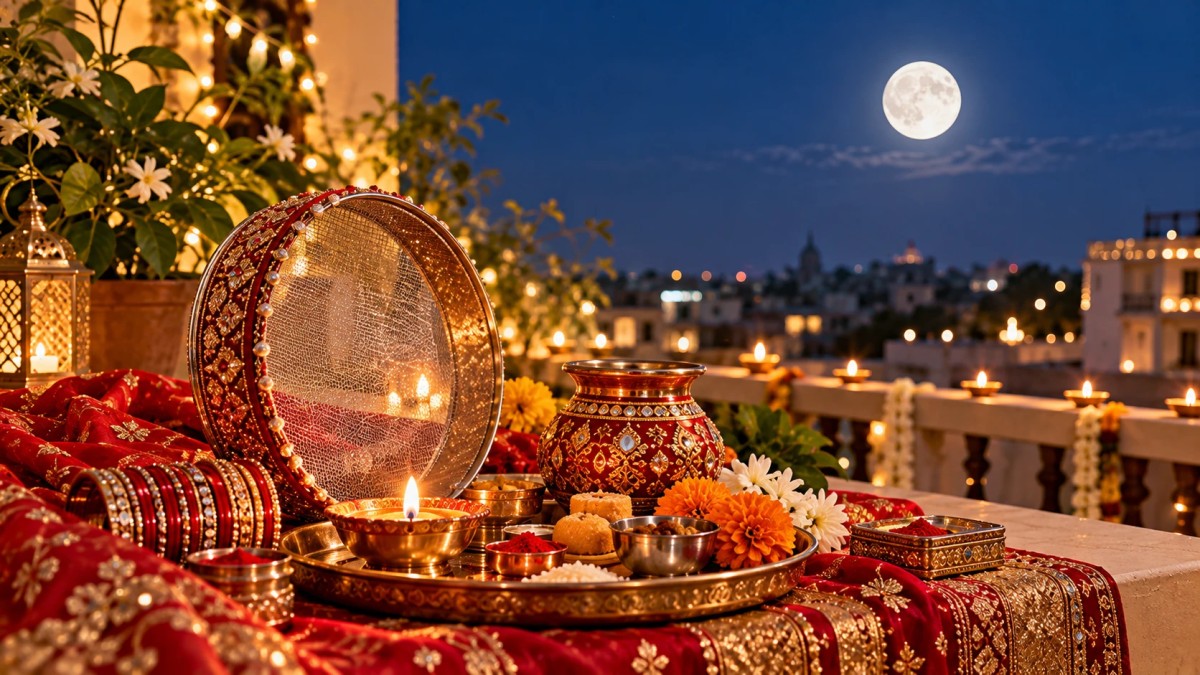
Karva Chauth 2027 falls on Monday, 18 October, according to Hindu almanacs (panchangs) and the Union government's restricted holiday list. The fast ends after moonrise, which one panchang puts at about 7:35 PM in Delhi that evening.
Here are the puja and moonrise times for major cities, the rituals of the day, and how to plan.
Key points
- Karva Chauth 2027: Monday 18 October (Kartik Krishna Chaturthi).
- Delhi: puja muhurat about 5:49 PM to 7:04 PM; moonrise about 7:35 PM, according to one panchang.
- Mumbai: puja muhurat about 6:14 PM to 7:28 PM; moonrise about 8:15 PM, according to one panchang.
- It is a restricted holiday for central government staff.
- Karva Chauth falls nine days after Dussehra and eleven days before Diwali in 2027.
Karva Chauth 2027 puja and moonrise times
| City | Puja muhurat | Moonrise |
|---|---|---|
| New Delhi | About 5:49 PM to 7:04 PM | About 7:35 PM |
| Mumbai | About 6:14 PM to 7:28 PM | About 8:15 PM |
| Hyderabad | Evening, from about 5:53 PM | About 7:51 PM |
Times are from different panchangs and are approximate. Moonrise changes by city, and clouds or haze can delay the moment you actually see the moon. Check a local panchang for your city, and keep an eye on the eastern sky.
Why Karva Chauth is on 18 October
Karva Chauth is observed on the Chaturthi (fourth day) of the dark half of the month of Kartik, as counted in the north Indian calendar, four days after the full moon. In 2027 that day falls on Monday 18 October. The name comes from the karva, a small earthen pot used in the puja, and chauth, meaning the fourth day.
The rituals of the day
Sargi (before sunrise): The day begins before dawn with sargi, a meal traditionally prepared by the mother-in-law, with dry fruit, sweets such as pheni, fruit and paratha. The fast begins after sargi.
The fast: Married women traditionally keep a nirjala fast, without food or water, from sunrise until they see the moon, praying for the long life and well-being of their husbands. Many unmarried women fast for a future partner, and many husbands now fast alongside their wives.
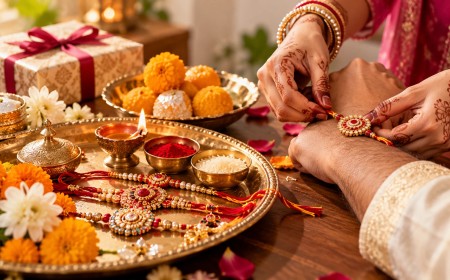
Getting ready: Women dress in bridal or festive clothes, often red, wear bangles and apply mehendi the day before, often at gatherings with friends.
Evening puja: Women gather, often in groups, with their decorated thalis. They pass the thalis around a circle while an elder narrates the Karva Chauth katha (story), and offer prayers to Goddess Parvati (Gauri), Lord Shiva and Lord Ganesh.
Moonrise: When the moon rises, women look at it through a sieve (channi), offer water (arghya) to the moon, and then look at their husbands through the same sieve. The husband offers the first sip of water and the first bite of food, ending the fast.
What goes in the Karva Chauth thali
A typical thali for the evening puja holds:
- An earthen or metal karva filled with water, sometimes with a spout.
- A diya and incense.
- Roli (kumkum), rice grains and a little sindoor.
- Sweets such as mathri, halwa or laddoos.
- A sieve (channi) for looking at the moon.
- A small picture or idol of Goddess Gauri, or a painted image of the Karva Chauth scene.
Many families also keep a set of bangles, bindis and other items of shringar on the thali as an offering.
Baya, the gift from the bride's family
In Punjabi tradition, the bride's mother sends a gift called baya (or baayna) to her daughter's mother-in-law before Karva Chauth, often including clothes, sweets, dry fruit and money. The mother-in-law, in turn, gives the sargi to her daughter-in-law. The exchange is a way for the two families to honour each other.
The story of Karva Chauth
The best-known story is that of Veeravati, a young wife and the only sister of seven brothers. On her first Karva Chauth, unable to bear seeing her suffer from hunger, her brothers tricked her into thinking the moon had risen by showing her a lamp behind a tree. She broke her fast early, and learned that her husband had died. Through her devotion and by keeping the fast properly for a year, her husband was restored to life.
Other stories link the fast to Savitri, who won back her husband Satyavan's life from Yama, the god of death, and to Draupadi, who kept the fast for the Pandavas.
Where Karva Chauth is celebrated
Karva Chauth is mainly celebrated in Punjab, Haryana, Delhi, Rajasthan, Uttar Pradesh, Himachal Pradesh and Madhya Pradesh, and by north Indian families across the country and abroad. In Andhra Pradesh and Telangana, women observe a similar festival, Atla Taddi, around the same time.
Hindi films and television have made the festival popular well beyond north India, and markets in Delhi, Chandigarh, Jaipur and Lucknow are busy with bangles, saris, thalis and mehendi artists in the days before.
If the moon is hidden by clouds
Late October skies in north India are usually clear, but haze or clouds can hide the moon. Many families then wait a little longer, or break the fast at the moonrise time given in the panchang, after offering arghya facing the direction of the moon. Others follow the advice of an elder or priest. There is no single rule, so follow your family's tradition.
Health and the nirjala fast
A full day without water is hard on the body, especially in warm weather.
- Eat a balanced sargi: Include fruit, dry fruit and some protein, and drink water before sunrise.
- Avoid heavy exertion during the day.
- Break the fast gently: Start with water and something light before a full meal.
- Check with a doctor if you are pregnant, breastfeeding, diabetic, have low blood pressure or take regular medication. Many families accept a fast with water or fruit for those who cannot keep a nirjala fast.
Karva Chauth 2027 for Indians abroad
Families in the US, UK, Canada and Australia follow local moonrise times, which can be very different from India. In Dallas, for example, one panchang gives moonrise on 18 October 2027 at about 8:54 PM local time. Use a panchang or moonrise app set to your own city.
Planning for Karva Chauth 2027
- It is a Monday: Many women will be at work while fasting. Plan a lighter day if you can, and leave work early enough to be home well before moonrise.
- Holiday: It is a restricted holiday for central government staff, which can be used as one of the two restricted holidays a year.
- Mehendi and shopping: Book mehendi artists early for Sunday 17 October, as they are in heavy demand.
- Next festival: Diwali follows on Friday 29 October 2027. See our Diwali 2027 guide.
See every festival of the year in our full festival calendar for 2027 and our Navratri and Dussehra 2027 guide.
On the evening of 18 October 2027, rooftops across north India will be full of women waiting for the moon. Check your city's moonrise time, look after your health, and keep the sieve and thali ready early.
Frequently asked questions
What's Your Reaction?
 Like
0
 Dislike
0
 Love
0
 Funny
0
 Wow
0
 Sad
0
 Angry
0





Comments (0)