


Mahavir Jayanti 2027 date, holiday and what it celebrates
Mahavir Jayanti 2027 is on Monday 19 April, a gazetted holiday and a long weekend. The life and teachings of Lord Mahavira, and how Jains celebrate the day.

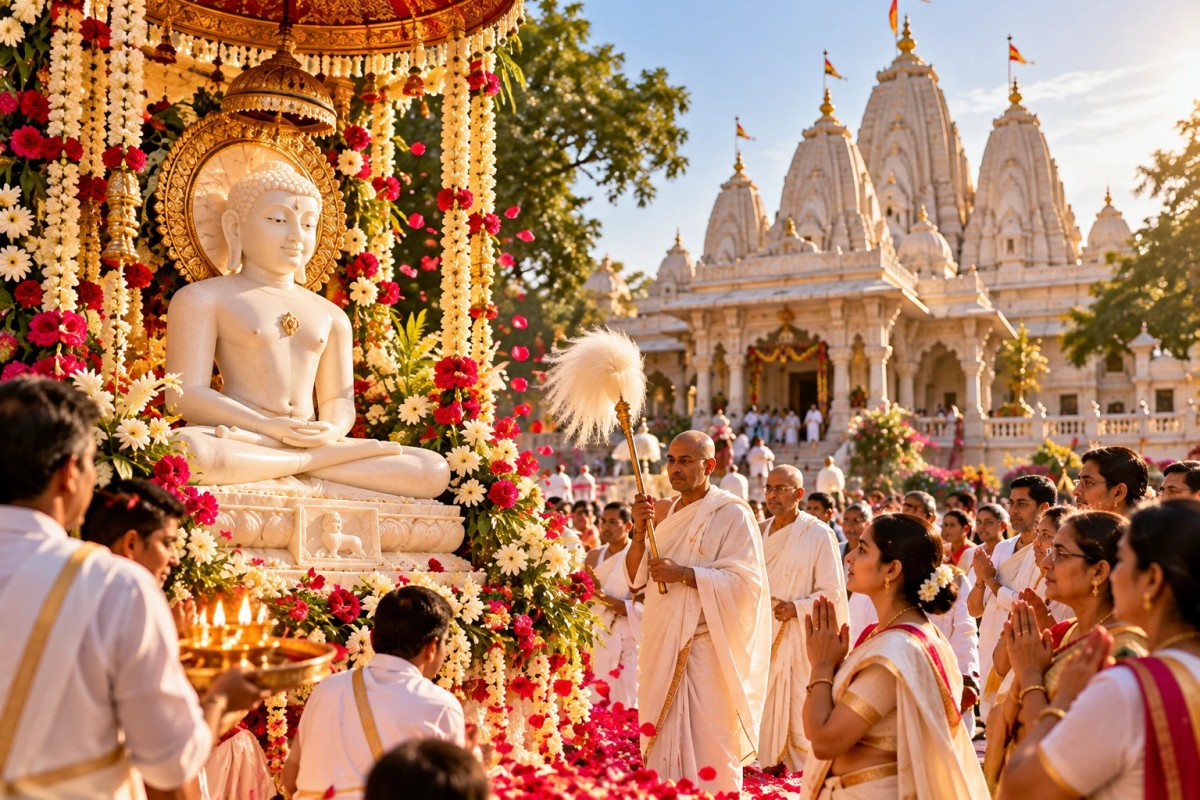
Mahavir Jayanti 2027 falls on Monday, 19 April. It marks the birth of Lord Mahavira, the 24th and last Tirthankara of Jainism, and is one of the most important festivals of the Jain community. It is a gazetted holiday on the Union government's list for 2027.
Because it falls on a Monday, Mahavir Jayanti gives many people a three-day weekend from 17 to 19 April. Here is the date, the meaning of the day and how it is celebrated.
Key points
- Mahavir Jayanti 2027: Monday 19 April (gazetted holiday).
- Also called Mahavir Janma Kalyanak, it falls on the 13th day of the bright half of Chaitra.
- It marks the birth of Lord Mahavira, the 24th Tirthankara of Jainism.
- Weekend of 17 to 19 April; with Ram Navami on Thursday 15 April, one day of leave gives five days off.
- Jains celebrate with temple rituals, processions, charity and the teaching of non-violence.
Mahavir Jayanti 2027 at a glance
| Detail | 2027 |
|---|---|
| Date | Monday 19 April 2027 |
| Tithi | Chaitra Shukla Trayodashi (13th day of the bright half of Chaitra) |
| Holiday status | Gazetted holiday for central government offices |
| Also called | Mahavir Janma Kalyanak |
Who was Lord Mahavira
Vardhamana Mahavira was born a prince in Kundagrama, near Vaishali in present-day Bihar. Jain tradition places his birth in 599 BCE, though historians differ on the exact dates. At around the age of 30 he gave up his royal life to become a wandering ascetic, and after about twelve and a half years of meditation and austerity he attained kevala jnana, complete knowledge.
He spent the next three decades teaching across the Gangetic plains, and attained nirvana (moksha) at Pawapuri, in Bihar. Jains mark his nirvana on Diwali, which is why Diwali is also a major Jain festival, and the Jain new year begins the next day.
Mahavira is the 24th Tirthankara, a "ford-maker" who shows the way across the river of rebirth. The first Tirthankara was Rishabhanatha (Adinath), and the 23rd was Parshvanatha.
The five vows
Mahavira taught a path built on five great vows (vratas):
| Vow | Meaning |
|---|---|
| Ahimsa | Non-violence towards all living beings, in thought, word and deed |
| Satya | Truthfulness |
| Asteya | Not stealing, not taking what is not freely given |
| Brahmacharya | Chastity and self-control |
| Aparigraha | Non-possessiveness, not being attached to people and things |
Monks and nuns take these vows in full; lay Jains follow them in a gentler form. The idea of anekantavada, that truth has many sides and no single viewpoint holds all of it, is another of the central Jain teachings.
How Mahavir Jayanti is celebrated
- Abhishek: The idol of Mahavira is ritually bathed with water, milk and fragrant liquids in temples.
- Processions: A rath yatra or shobha yatra carries the idol of Mahavira through the streets, with devotional songs, bands and children dressed as figures from Jain stories. In many towns, the community also organises a cradle ceremony, rocking a small cradle to celebrate the birth.
- Charity: Jains give generously to charity, especially to animal shelters (panjrapoles), hospitals and schools, and distribute food.
- Fasting and prayer: Many fast or eat simple food, and visit temples to hear talks on Mahavira's life and teachings.
- Non-violence in practice: Many communities campaign for animal welfare, vegetarianism and against killing on the day, and some states close slaughterhouses on Mahavir Jayanti.
Jain food and fasting
Jain food rules follow from ahimsa. Jains are strictly vegetarian, and many also avoid root vegetables such as onion, garlic, potato and carrot, because pulling them up kills the whole plant and the tiny organisms in the soil. Honey and, for many, foods that may have been fermented for long periods are avoided too.
Many observant Jains also eat only between sunrise and sunset, a practice called chauvihar, and drink boiled and cooled water. On festival days, some keep a full fast (upvas) or eat only once a day (ekasana). Restaurants and sweet shops across India now offer "Jain" versions of dishes, cooked without onion, garlic or root vegetables.
Jain temples and places to visit
- Pawapuri (Bihar): The Jal Mandir, a white marble temple in the middle of a lotus pond, marks the site where Mahavira attained nirvana. It draws large crowds on both Mahavir Jayanti and Diwali.
- Kundalpur and Vaishali (Bihar): Linked by different traditions to Mahavira's birthplace.
- Palitana (Gujarat): The Shatrunjaya hill, with hundreds of temples, one of the holiest Jain pilgrimage sites.
- Shravanabelagola (Karnataka): Home of the giant monolithic statue of Bahubali (Gommateshwara), anointed in the grand Mahamastakabhisheka ceremony about once every twelve years.
- Dilwara (Mount Abu) and Ranakpur (Rajasthan): Famous for some of the finest marble carving in India.
- Delhi: The Digambar Jain Lal Mandir near the Red Fort, with its bird hospital.
Mahavira's ideas today
Mahavira's teaching of non-violence has shaped Indian thought far beyond the Jain community. Mahatma Gandhi grew up in Gujarat among Jain neighbours and counted the Jain poet and thinker Shrimad Rajchandra among his most important early influences, and ahimsa became the foundation of his political method.
Ideas such as aparigraha, owning only what one needs, and anekantavada, respecting other points of view, are often cited today in discussions of sustainable living and tolerance. Jain organisations run some of India's best-known animal hospitals and shelters.
Mahavir Jayanti abroad
Jain communities in the US, the UK, Canada, Kenya and Belgium celebrate Mahavir Jayanti at their temples and community centres, often on the nearest weekend. In 2027 it falls on a Monday, so many events abroad will be held on Sunday 18 April.
The Jain community in India
According to the 2011 Census, India has about 45 lakh Jains, around 0.4% of the population, with the largest communities in Maharashtra, Rajasthan, Gujarat and Madhya Pradesh. Jainism has two main traditions, the Svetambara ("white-clad") and the Digambara ("sky-clad"), which differ on some practices and texts but share the core teachings of Mahavira.
Other Jain festivals in 2027
- Paryushan and Das Lakshana: The most important Jain festival of the year, eight to ten days of fasting, prayer and forgiveness, held in the monsoon season, usually in August or September. It ends with Kshamavani or Samvatsari, when Jains ask forgiveness with the words "Michhami Dukkadam".
- Diwali (29 October 2027): Marks Mahavira's nirvana.
Planning for Mahavir Jayanti 2027
- Long weekend: Mahavir Jayanti on Monday 19 April, with Saturday and Sunday before it, gives a three-day weekend.
- Five days off: Ram Navami is on Thursday 15 April, also a gazetted holiday. Taking Friday 16 April as leave gives five days off, from 15 to 19 April. Vaisakhi falls on 14 April. See our long weekends 2027 guide.
- Meat and alcohol: Some states and cities close meat shops and slaughterhouses on Mahavir Jayanti. Check local notices before the weekend.
See our Baisakhi and regional New Year 2027 guide and the full festival calendar for 2027.
On 19 April 2027, Jain temples across India will celebrate the birth of Mahavira with processions and prayers. His message of non-violence, restraint and respect for every living being is as relevant as ever.
Frequently asked questions
What's Your Reaction?
 Like
0
 Dislike
0
 Love
0
 Funny
0
 Wow
0
 Sad
0
 Angry
0







Comments (0)