


Muharram and Milad-un-Nabi 2027 dates in India
Muharram (Ashura) 2027 is expected on Wednesday 16 June and Milad-un-Nabi on Sunday 15 August in India, subject to the moon. What each day means and marks.

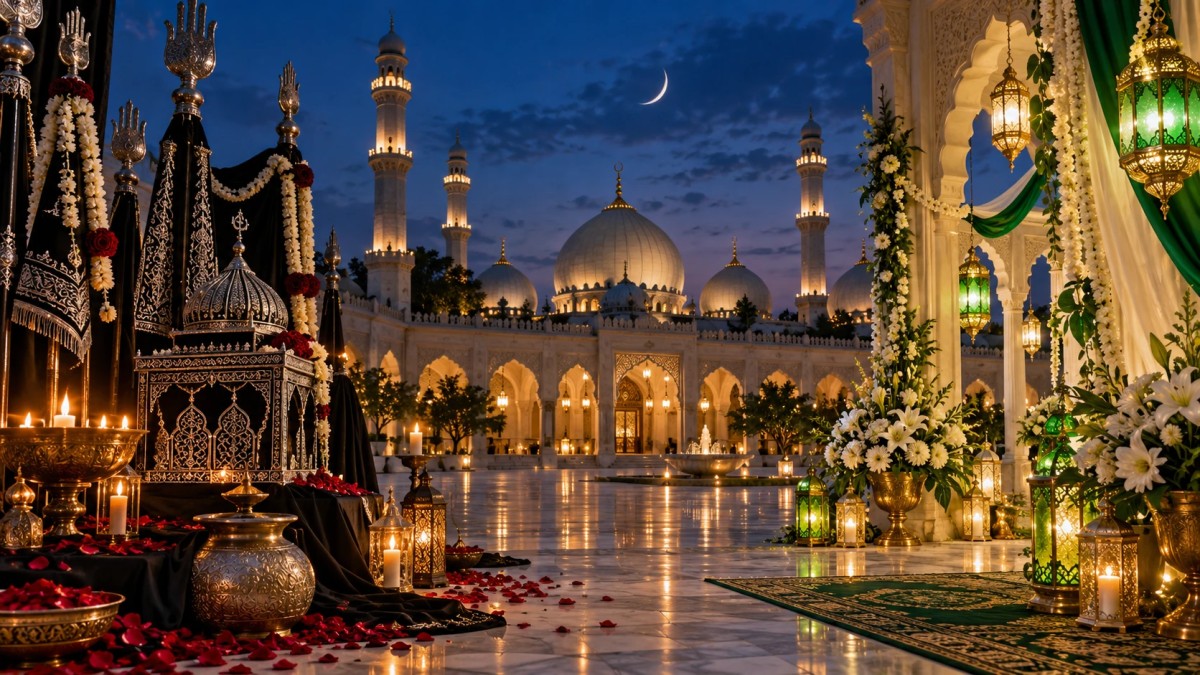
Muharram 2027, the first month of the Islamic calendar, is expected to begin in India around 6 or 7 June, with Ashura, the tenth day, expected on Wednesday, 16 June 2027. Milad-un-Nabi, the birth anniversary of the Prophet Muhammad, is expected on Sunday, 15 August 2027, the same day as Independence Day.
Both are gazetted holidays on the Union government's list for 2027, and both depend on the sighting of the moon. Here is what each day means and how it is observed in India.
Key points
- Islamic New Year (1 Muharram 1449): expected around 6 or 7 June 2027.
- Ashura (10 Muharram): expected Wednesday 16 June 2027 in India (gazetted holiday); Saudi Arabia's calendar gives 15 June.
- Milad-un-Nabi (12 Rabi al-Awwal): expected Sunday 15 August 2027 in India (gazetted holiday).
- Muharram is a time of mourning for many Muslims, not a celebration.
- All dates depend on moon sighting and can change by a day.
Muharram and Milad-un-Nabi 2027 at a glance
| Occasion | Hijri date | Expected date in India |
|---|---|---|
| Islamic New Year | 1 Muharram 1449 | About Sun 6 or Mon 7 June 2027 |
| Ashura | 10 Muharram 1449 | Wed 16 June 2027 |
| Milad-un-Nabi | 12 Rabi al-Awwal 1449 | Sun 15 August 2027 |
The government's holiday order says the dates of Muharram and Milad-un-Nabi, like those of the two Eids, may change depending on the moon, and any change will be announced.
Muharram and the Islamic New Year
Muharram is the first month of the Islamic (Hijri) calendar and one of the four sacred months in Islam. The Islamic calendar counts its years from the Hijra, the migration of the Prophet Muhammad from Mecca to Medina in 622 CE. In June 2027, the Islamic year 1449 begins.
The new year is a quiet occasion in most of India. Many Muslims mark it with prayer and reflection rather than celebration.
Ashura, the tenth of Muharram
The tenth day of Muharram, Ashura, is observed differently by different Muslim communities.
For Shia Muslims, Ashura is the most solemn day of the year. It marks the martyrdom of Imam Hussain, the grandson of the Prophet Muhammad, and his family and companions at the Battle of Karbala, in present-day Iraq, in 680 CE. The first ten days of Muharram are days of mourning:
- Majlis: Gatherings where the events of Karbala are recounted.
- Marsiya and noha: Elegies and lamentations recited and sung in memory of Hussain.
- Processions: On Ashura and the days before, mourners carry tazia (replicas of Hussain's tomb), alams (standards) and taboots through the streets.
- Sabeel: Stalls serving free water and sherbet, remembering the thirst of Hussain's family at Karbala, where they were cut off from water.
For Sunni Muslims, Ashura is a day of fasting and prayer. Many fast on the 9th and 10th, or the 10th and 11th, of Muharram, following the tradition of the Prophet, who is reported to have fasted on Ashura in remembrance of the day Moses and the Israelites were saved from Pharaoh. In parts of India, Sunni communities also take part in Muharram gatherings and processions.
Because it is a day of mourning for many, greetings such as "Happy Muharram" are inappropriate. A respectful message of remembrance is more fitting.
Where Muharram is observed in India
- Lucknow: The city's historic imambaras, built by the Nawabs of Awadh, are at the centre of some of India's best-known Muharram observances, with processions through the old city.
- Hyderabad: The Bibi ka Alam procession on Ashura, with the alam carried on an elephant through the old city, is one of the city's oldest traditions.
- Kolkata, Mumbai, Delhi and Jammu and Kashmir: Large processions and majlis are held, with traffic diversions on the main routes.
Shared traditions: In parts of the Deccan, Uttar Pradesh and Bengal, Muharram has long drawn people of other faiths too. In some villages, Hindu families build or carry tazias, or offer vows at local alam shrines, a reflection of centuries of shared local culture. In Hyderabad, khichda, a dish of meat, wheat and lentils, is cooked and shared during the first ten days, and food and water are offered freely to passers-by.
Police in major cities usually issue traffic advisories and route plans for Muharram processions. Check them before you travel on Ashura.
Arbaeen, forty days later
Forty days after Ashura, Shia Muslims observe Arbaeen (Chehlum), which in 2027 is expected in late July. It is marked in India with majlis and processions, and every year many Indian Shia pilgrims travel to Karbala in Iraq, where Arbaeen draws one of the largest annual gatherings in the world. Anyone planning the journey should follow the Ministry of External Affairs' travel advisories for Iraq.
Milad-un-Nabi on 15 August 2027
Milad-un-Nabi, also called Eid-e-Milad or Mawlid, marks the birth of the Prophet Muhammad in Mecca, traditionally dated to 570 CE, on the 12th of the month of Rabi al-Awwal. In parts of India the day is also called Barawafat, and some communities also remember it as the anniversary of the Prophet's passing.
How the day is observed varies. Many Muslims mark it with:
- Naat and dua: Recitations of poetry in praise of the Prophet, and prayers.
- Processions (juloos): Processions with green flags in many cities.
- Illuminations: Mosques and streets decorated with lights.
- Charity and food: Distribution of food and sweets.
- Hazratbal, Srinagar: A relic associated with the Prophet is displayed to devotees at the Hazratbal shrine on the occasion.
Some Muslims, following different scholarly views, do not celebrate the Prophet's birthday as a festival, and observe it quietly or not at all. Both approaches are part of Indian Muslim life today.
Holidays and planning
| Date | Holiday | Note |
|---|---|---|
| Wed 16 June 2027 | Muharram (gazetted) | May change with the moon |
| Sun 15 Aug 2027 | Milad-un-Nabi (gazetted) | Same day as Independence Day; no extra day off |
- Milad and Independence Day: In 2027, Milad-un-Nabi is expected on the same Sunday as Independence Day and Parsi New Year, so most people will not get an extra day off.
- Moon sighting: If the moon is sighted a day early or late, the government may change the holiday. Watch for announcements a day or two before.
- States: Many states also declare holidays for Muharram and Milad-un-Nabi. Check your state's 2027 list.
The Islamic year 2027 at a glance
| Occasion | Expected date in India |
|---|---|
| Ramadan begins | About 9 Feb 2027 |
| Eid ul-Fitr | Wed 10 Mar 2027 |
| Eid al-Adha (Bakrid) | Mon 17 May 2027 |
| Islamic New Year | About 6 or 7 Jun 2027 |
| Muharram (Ashura) | Wed 16 Jun 2027 |
| Milad-un-Nabi | Sun 15 Aug 2027 |
Read our guides to Ramadan and Eid ul-Fitr 2027 and Bakrid 2027, and see the full festival calendar for 2027.
From the remembrance of Karbala in June to the celebration of the Prophet's birth in August, the middle of 2027 holds two of the most significant days in the Muslim calendar. Watch for the moon-sighting announcements, and check local traffic advisories on Ashura.
Frequently asked questions
What's Your Reaction?
 Like
0
 Dislike
0
 Love
0
 Funny
0
 Wow
0
 Sad
0
 Angry
0






Comments (0)